The foolproof guide to perfect pancakes – and which recipe is best
We tested the most popular recipes and asked chefs to share their top tips for stress-free Shrove Tuesday pancakes.
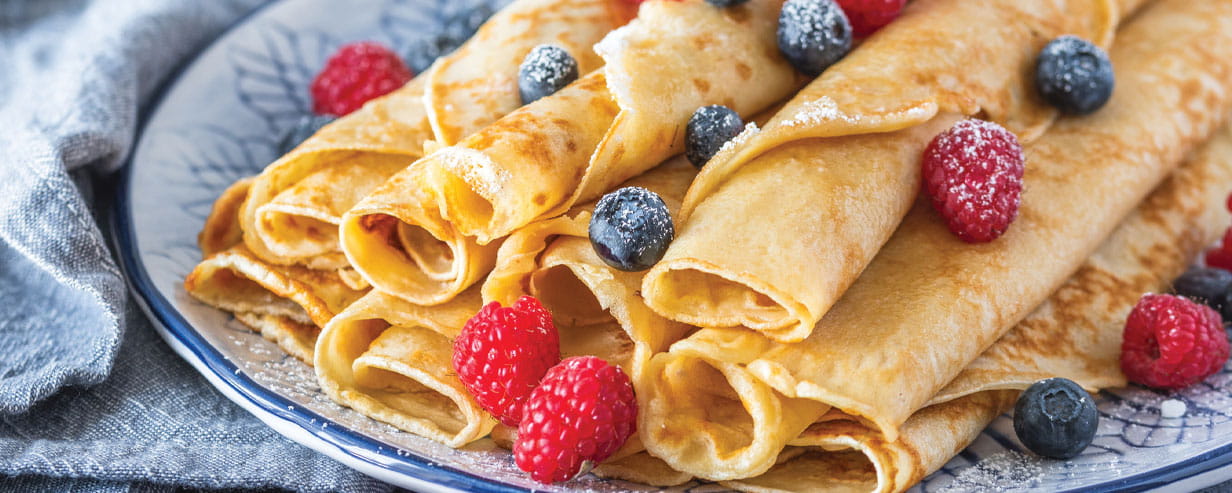
We tested the most popular recipes and asked chefs to share their top tips for stress-free Shrove Tuesday pancakes.
With around 65% of Brits getting involved in Shrove Tuesday each year, and nearly three-quarters choosing to make pancakes from scratch, you’d think we’d have this pancake business nailed, wouldn’t you? After all, the ingredients are about as simple as it gets: eggs, flour and milk. And yet, every year, the same frustrations crop up – lumpy batter, pancakes that won’t flip – and the first one never quite makes it to the plate.
Pancakes are practically a food group in my house. We make them not just on Shrove Tuesday, but to mark birthdays and back-to-school days, and even for the occasional 'just because' dessert. I’ve even invested in a dedicated pancake pan. I’m confident with the basics and usually get good results – thin, golden pancakes that disappear fast.
Still, there’s always room to improve, so to see whether some recipes really are more reliable than others – and to find out what actually makes the difference at the hob – I put some to the test.
I tried several classic pancake recipes (yes, even with the same three ingredients, there are subtle differences) and asked some top chefs for their tips on the best ways to get pancakes right, every time.
I quickly realised that everyone has their own go-to pancake recipe for Shrove Tuesday. The differences are often small, but do they really matter?
To find out, I cooked four popular recipes side-by-side, with my family stepping in as the ultimate taste testers.

Delia is the pancake god in our house. We’ve always used her basic pancake recipe, so I felt completely at ease making these. The batter is a little thicker than some, which means it can take a bit more confidence to swirl it evenly around the pan, but the results are reliably good.
I particularly like the fact that melted butter is added directly to the batter, which helps the pancakes cook evenly and makes them easier to flip. Delia also suggests wiping the remaining butter around the pan with kitchen paper, so that you lightly grease it without overdoing the fat – no greasy edges or soggy pancakes here.
As with most pancake recipes, the first one is a bit hit-and-miss, but once you’re into your rhythm, the rest turn out thin, golden and dangerously moreish.
Overall verdict: These get a clear thumbs-up from the family, perhaps partly out of loyalty, but mostly because they’re dependable, well-balanced and hard to fault.

Next up is the queen of baking herself. Mary Berry’s pancake recipe is similar to Delia’s, but with one key tweak: instead of two eggs, you use one whole egg and one extra yolk. The result is a noticeably thinner batter, which makes it much easier to pour into the pan and swirl evenly, particularly if you’re aiming for those classic, lacy edges.
Mary suggests cooking the pancakes in oil, but I stuck with butter here, purely out of habit. Aside from that small change, I followed the recipe closely. These pancakes cook very quickly and, unusually, the first one came out well – no sacrificial pancake required.
Overall verdict: These were my son’s clear favourite. He polished off four in one sitting and announced that this should be our go-to recipe from now on. Coming from a teenager who only usually communicates in grunts, that’s high praise indeed.
If you Google “pancake recipe”, this is the one you’re most likely to land on. The version from BBC Good Food is straightforward and, like Delia’s recipe, includes added fat mixed into the batter – sunflower oil, in this case.
The recipe is easy to follow, the batter behaves well in the pan, and the pancakes cook quickly, making them simple to flip. But side-by-side with Delia’s and Mary’s, these felt as though they were missing a little something. The texture is fine, but the flavour doesn’t quite have the same richness or depth.
Overall verdict: Effortless to make but slightly underwhelming on their own. Once loaded with lemon, sugar or chocolate spread, they’re perfectly pleasant. But compared with the others, they’re not the ones you’d rush back to make again.

What if you don’t have scales to hand? This is where Jamie Oliver’s one-cup pancake recipe comes into its own. Instead of weighing ingredients, you simply use a mug, adding equal amounts of flour and milk, plus an egg. It’s about as easy as pancake making gets.
Jamie’s original recipe uses self-raising flour, which produces a thicker, fluffier pancake, closer to an American style than a traditional British crêpe. We added blueberries as suggested, but, while the results were undeniably tasty, they didn’t quite hit the classic Shrove Tuesday brief. The batter was also noticeably thick.
To bring it closer to a traditional pancake, I tried adapting the recipe using plain flour instead. The batter remained fairly thick – similar to Delia’s – but the pancakes themselves were thinner and closer to a crêpe.
Overall verdict: A brilliant option if you don’t have scales or want something a little more relaxed and forgiving. Best suited to those who prefer a thicker pancake, or who want an easy way to use up fruit such as blueberries or raspberries that are past their best.
If you want your pup to get in on the pancake fun, don’t give them the traditional recipe as it can contain ingredients that upset dogs’ stomachs, including milk, butter and sugar, and offers little nutritional value for them. Instead, try this recipe from Blue Cross for a yummy, dog-friendly treat.
To help you get pancakes right every time, chefs share their most reliable, no-fuss tips.

It’s tempting to throw everything into a bowl and start whisking, but a little preparation makes all the difference. Vittoria Veltri, a Leith-trained chef, recommends sifting the flour first to avoid lumps forming in the batter.
“If lumps do appear, pass the batter through a fine-mesh sieve or give it a quick blitz with a hand blender,” she advises.
“Flawless pancakes start with a properly balanced, rested batter,” advises Dean Harper, chef at Harper Fine Dining.
“Rest the mixture for 30 to 60 minutes for crêpes, and 10 to 20 minutes for thicker styles, so that the gluten relaxes and the starch fully hydrates. This will deliver even colour, lacy edges and no chew.”
If you’re serious about pancakes, the pan matters more than you might think. I can vouch for this – my pancakes have definitely improved since I invested in a pan with low sides. According to Veltri, this style of pan works better for two simple reasons.
“A low-profile pan allows steam to escape instantly, ensuring your crêpe stays crisp and lacy rather than steaming itself into a rubbery mess,” she explains.
“Plus, it lets you slide right to the centre of the crêpe without the handle of your tool snagging on the edge. A low-walled pan allows for a steeper, faster tilt, making your ‘wrist flick’ more fluid and the resulting layer much thinner.”
Preheating the pan is essential, but judging the right temperature by eye alone isn’t always easy. Harper recommends using the first pancake as a simple guide.
“Use the first pancake as your heat test,” he suggests. “If it’s pale and rubbery, nudge the heat up, and if patchy or smoky, lower the heat and lightly wipe the pan.”
The pan should be hot, but the fat you use for greasing shouldn’t be.
“Make sure the butter you use for greasing is cold when it touches the pan; this prevents it from burning before the batter arrives,” says Veltri.
Award-winning chef Aldo Zilli prefers olive oil to butter, and has a clever way of applying it evenly.
“Peel a potato, cut it in half, dip it into the oil and use it to grease the pan,” he says. “It creates a naturally non-stick surface and helps you avoid using too much fat.”

Patience pays off. Veltri suggests waiting until the surface of the pancake looks matte, the edges start to dry and lift, and small bubbles appear before flipping.
“Hold the pan steady with your left hand,” she says. “Using a flat, wide turner in your right hand, push it all the way to the middle of the crêpe before you lift (reverse if you're a lefty!). Flip in one confident motion.”
If there’s someone who knows a thing or two about flipping, it’s Zilli. He holds the Guinness World Record for flipping a pancake 117 times in one minute, and once tossed one more than three metres into the air!
His advice for flipping? “Leave for about 30 seconds, wait for the pancake to turn golden underneath and bubbles to appear, then flip!” he says.
To ensure an even, golden finish, Veltri recommends wiping the pan between each pancake.
“Use a piece of kitchen towel to clean away the old butter, then use a brush to apply a fresh, tiny amount for the next one,” she suggests.
Once cooked, stack pancakes directly on top of each other rather than separating them.
“The residual steam actually helps them stay soft and pliable,” says Veltri
Once you’ve nailed the basics, you can have some fun with your pancakes.
“If you have a sweet tooth, you can replace three tablespoons of flour with cocoa powder, or add flavourings like vanilla, cinnamon or orange zest,” suggests Veltri.
Zilli says that while you can’t go wrong with lemon and sugar as a topping, it’s fun to try something different.
“You could add some poppy seeds and spiced pear, or whatever sweet toppings take your fancy,” he says. “Or go for a savoury option. Being a huge mushroom fan, I love to add mushrooms, spinach, chives and parsley along with a little creme fraiche. Delicious!”
If you’re making gluten-free or vegan pancakes, Harper advises on a few tweaks to make the most of the batter.
“For gluten-free mixes, stir gently and rest longer for cohesion. And for vegan or high-protein batters, adjust the hydration and cook a touch lower and longer, because plant sugars and dairy proteins brown faster, keeping the texture tender and evenly coloured,” he says.
Beyond pancakes, Aldo Zilli is helping spotlight the next generation of Italian culinary talent as part of The Italian Awards, with public voting now open ahead of the Mayfair ceremony on 30 March 2026.
(Hero image credit: Getty)

Find out about Saga's gastronomy holidays here...
They say the way to the heart is through the stomach, and Saga’s thoughtfully crafted food and wine holidays are perfect if you like trying new flavours and exploring traditional methods of cooking.

Your chance to win cruise for two to Cádiz, Casablanca and the Canary Islands, worth more than £9,600.

From rice to roast chicken, there’s a lot of confusing advice about leftover food. We ask the experts to separate fact from fiction.
.jpg?la=en&h=541&w=1232&hash=BA7C6DF0A90C6CDBDF9E25A757CC17BF)
Want to make the perfect brew? Then follow these expert tips
We’ve found the best money-saving alternatives to some of the most popular branded products.

We've got expert advice on how to cook up a feast in your air fryer in minutes.
These foods will lose flavour and freshness if you store them in the fridge.