Paul Lewis: The best ways to give money this Christmas
A financial present could be a perfect Christmas gift for your grandchildren. Our money expert looks at your choices, from giving money to setting up a pension.
A financial present could be a perfect Christmas gift for your grandchildren. Our money expert looks at your choices, from giving money to setting up a pension.
Stuck for a gift for a grandchild or young relative? How about a pension? Yes really!
It is astonishing that you can give a pension to someone under the age of 18. Even better, for every £100 you put into Santa’s sack, Rachel Reeves chips in another £25 when it goes into the pension fund!
It won’t actually say “love Rachel” as it is just the tax relief that is routinely added to the money paid into a pension. It is given even though the young person does not pay income tax.
These pensions are called Junior Self-Invested Personal Pensions (or Junior SIPPs) and must be set up by a parent. But then anyone can pay into them.
Recent figures show that 45,000 people under the age of 18 have one and in 2022/23 £80 million was put into them. At 18, the child takes over running their SIPP but, like any other pension, they cannot withdraw it until their late fifties.
At the moment that age is 55, but from April 2028 it will rise to 57 and may rise further. That means the money is inaccessible for a long time.
But that gives these young pension owners a huge advantage – decades for the magic of compound interest to do its work. They have at least 40 years and if you start the pension for them very young – perhaps for their very first Christmas – then it will be nearer 60 years.
As an example, suppose you had done this 50 years ago (you couldn’t, by the way, as the rules didn’t allow it then, but it’s Christmas so let’s pretend!) and invested that first £100 – plus the Chancellor’s £25 – in a simple tracker fund that follows the well-known FTSE 100 index of our biggest companies.
If that had grown at this century’s average of 6.3% a year it would now be worth over £2,650. Even after charges – which you should keep as tiny as you can – it could still grow to £2,000 or so.

If you make this a regular annual gift then even £100 a year would give them a decent pension fund in their fifties, or of course even more at 70 when they will probably reach state pension age!
There is a limit to the Chancellor’s generosity – the maximum you can put in each year is £2,880 (if you can afford it!), plus the tax relief top up of £720, making £3,600 in the SIPP. Do that every year and there could be close on £1 million there when they reach 50. And they will certainly look back fondly at their amazing grandparents who thought so far ahead.
Saga Money has advice on gifting money to grandchildren.
As its name implies, the parent (or at 18 the young person) decides how the money in a Self-Invested Personal Pension is invested.
Take independent financial advice about that but make clear to your adviser the golden rule of investment – keep charges as low as possible. All investment is a risk but the one
thing you can control is the amount that is siphoned off by advisers and fund managers.
The lower those charges, the more the money will grow. Cheapest of all are tracker funds that follow a stock market index – they can cost as little as 0.15% a year. In the long term – and pensions bought for children are very long term – markets have always grown faster than cash or inflation.
If you pay in a regular amount out of your income that does not reduce your lifestyle, then that money will be exempt from Inheritance Tax when you die. Single gifts above £3,000 a year will count as part of your estate unless you die more than seven years after making them.
Incidentally, it is not just children you can do this for. You can start a pension for anyone under the age of 75 on the same terms – perhaps your spouse or partner? And if they are over 55 (or 57 from April 2028) they can take the money out at once if they wish, 25% tax free and the rest taxed at their marginal income tax rate.
Giving a pension is very long term and not, you may think, very Christmassy. But on my Christmas list, giving cash still comes top for young relatives who are beyond the toys age.
They love it. They can buy what they want with it. And if the local shops, cafés, and cinemas no longer take cash – and of course online retailers cannot take it – they can learn how to pay it in at a bank or, if they have all closed locally, at a Post Office.
Then they can spend it contactlessly or online as they wish.
Every child whose age is in double figures should have their own account and card. Under 11 these are generally prepaid cards, but from 11 they can be like current accounts with a debit card – but no overdraft!
They can usually be monitored online by parents. Opening one of those might also be a nice gift.
Some people still think giving cash is a bit too much like a Mafia wedding. They prefer gift cards, partly because they feel they have some control over what the money is used to buy.
But millions of pounds every year are wasted on gift cards that are not spent, often by accident because they always expire – sometimes after as little as six months and usually after one or two years. Which of course a £10 note never does. So I prefer the flexibility and longevity of cash.
Research shows that although givers prefer cards, those who get them – especially young people – would have preferred cash. And remember that cash teaches them to manage money and understand that most essential money fact – when it’s gone, it’s gone!
Find out the best gifts to teach your grandchildren about money – for a present that’s worthwhile and fun.
(Hero image credit: Eliot Wyatt)

Why settle for less? Switch up your savings with true easy access and a great rate:
In partnership with NatWest, designed for people over 50. Interest paid monthly.
New customers only. UK residents only.

Treat someone special to a Saga Magazine subscription – 12 inspiring issues for just £34.95. Plus, you will also enjoy three free gifts: a cotton tote bag, a bumper puzzle book and a box of Guylian Seashell chocolates.
Every issue is packed with real-life stories, exclusive celebrity interviews, insightful articles and practical tips on health, finance, travel, and more. A thoughtful gift that entertains all year round.
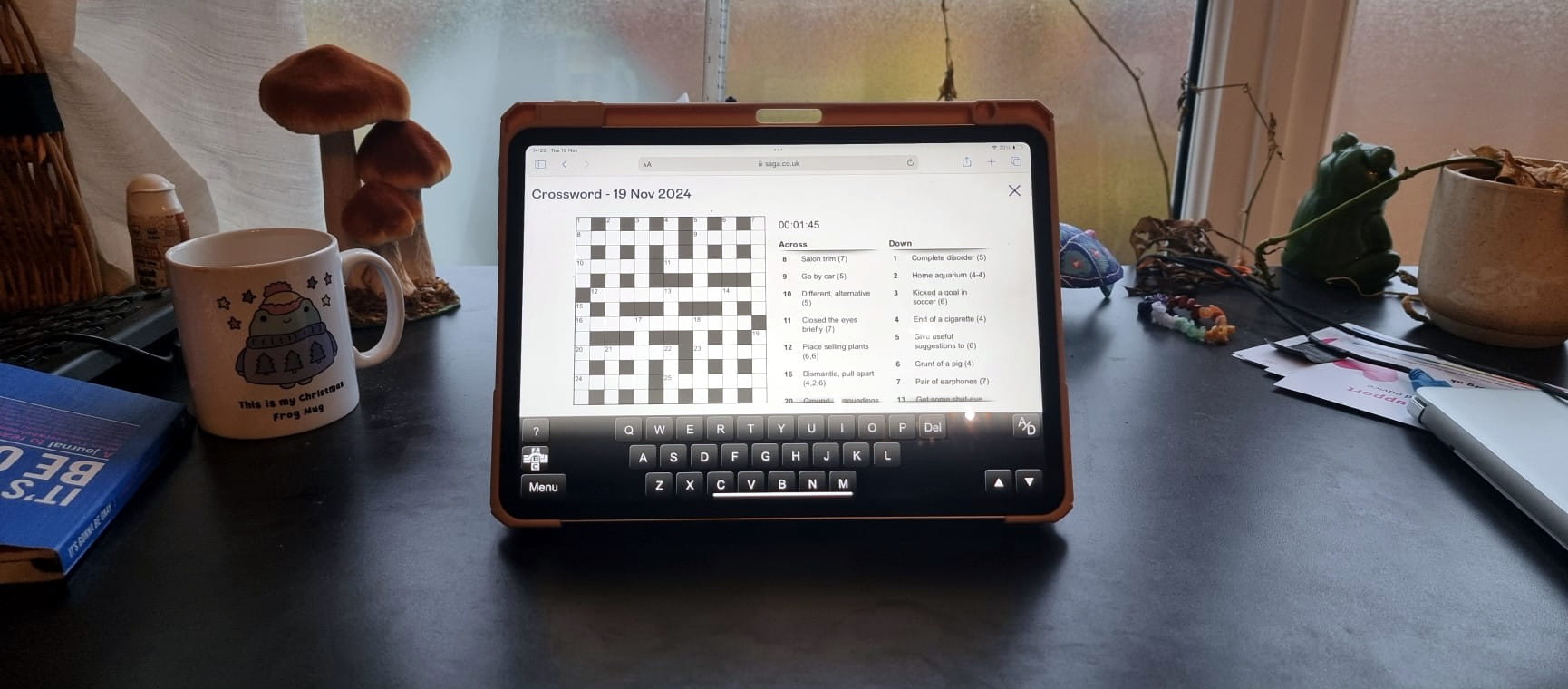
Try these simple tips and fixes for Saga’s crossword, sudoku and codeword puzzles.

With the start of the new financial year on 6 April, our money expert explains the changes to your pension, benefits and taxes.