Dr Mark Porter on the pros and cons of weight-loss jabs for older people
Weight-loss injections can affect our bodies in different ways as we get older. Our medical expert explains the risks and benefits.
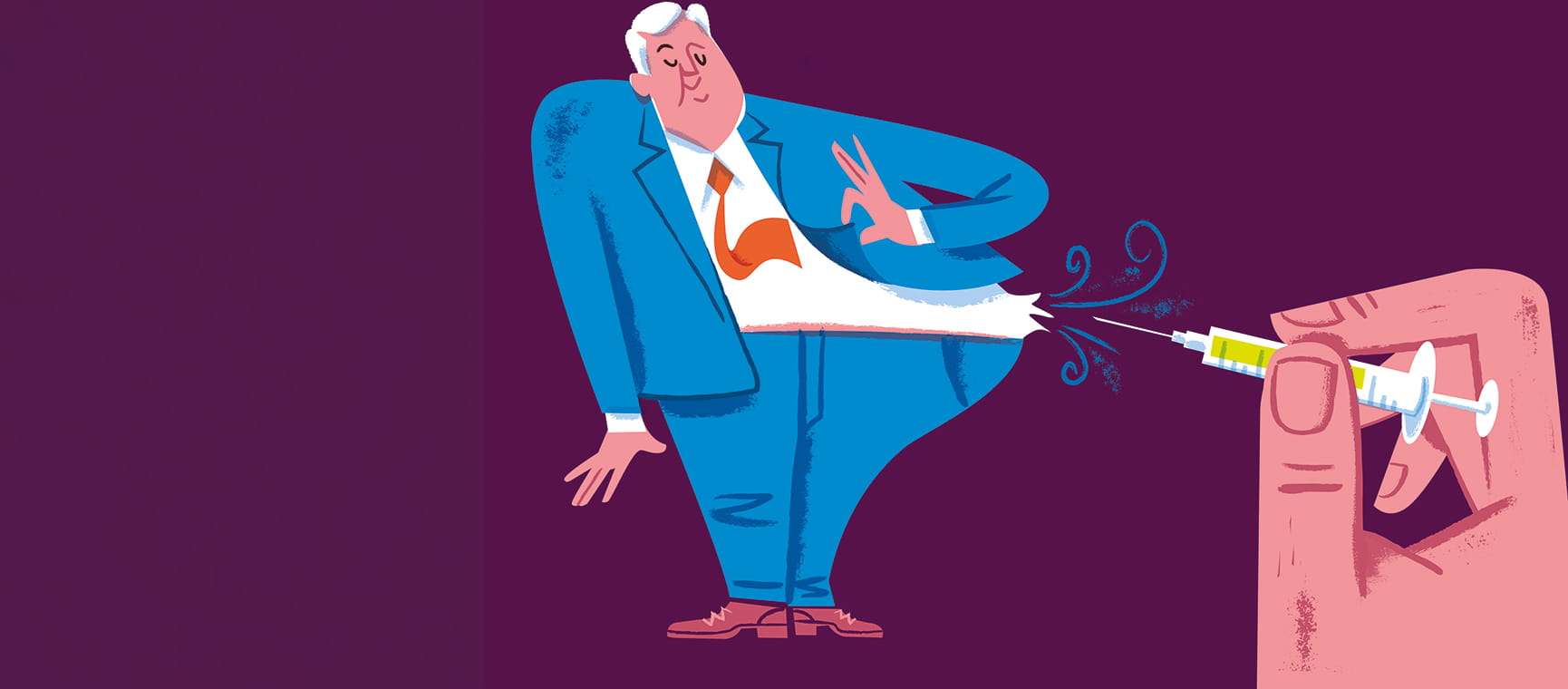
I am considering trying one of the new slimming jabs, Wegovy or Mounjaro. I’m short and plump with a body mass index (BMI) that’s hovered around 30 since my early fifties (I’m 72).
I take no medicines, walk regularly and eat healthily but despite many ‘successful’ diets over the years, the weight piles back on.
I’m happy to pay for injections privately but am worried as you rarely hear of older people using them. Do others know something I don’t?
Both drugs work by reducing appetite and making you feel fuller earlier and are very effective at encouraging weight loss – Mounjaro (tirzepatide) probably more so than Wegovy (semaglutide).
And while I do know people your age who are taking them for weight loss (they’re also used in Type 2 diabetes), they tend to be more reticent than younger people about telling others that they are on a slimming jab. At least, that is my experience.
I would discuss your plans with your own GP. They are best placed to advise on the pros and cons, even though they won’t be able to prescribe a slimming jab on the NHS as you don’t fit the current restrictive criteria.
These are, incidentally, having a BMI over 40, plus four out of these five conditions: Type 2 diabetes; high blood pressure; heart and vascular disease; high cholesterol; and obstructive sleep apnoea.
Here is what I tell my older patients.
First, while you’ll almost certainly lose plenty of weight – and fast – you’re likely to put it all back on within a year of stopping the drugs unless you make other permanent diet and lifestyle changes.
Second, this rapid weight loss can have implications for your muscles and bones. Only two thirds or so of the weight you lose will be fat, the rest is lean mass mainly made up of muscles and bone. And, as someone in their early seventies, you will probably already have lost quite a bit of muscle and bone strength as part of the natural ageing process.
Add in the accelerating effects of rapid weight loss and you could find yourself weaker, frailer and at risk of osteoporosis and fractures, such as a broken hip.
Some of this weakening could be mitigated by exercise and diet. You should seek advice from your local physio or gym about a programme that combines strength training with weight-bearing exercises. We are not looking to build big guns and a six pack here, just to try to stem any loss and maintain what you already have.
And make sure you are eating enough protein (at least 1g a day for every kilo of body weight) and calcium (700-1,200 mg a day), as well as taking daily vitamin D supplements (10mcg/400 units of D3). Many people are not.
I can’t go into all the finer details here, but if you are considering paying for these drugs – typically at least £125 a month – then I would start by spending around the same amount on consulting a qualified dietitian who can draw up a suitable diet plan for you. And the same applies to a physio or exercise trainer.
Extra expense I know, but a wise investment.
With 26 years experience in practice and a partner in a busy South Gloucestershire surgery, Dr Mark is also resident doctor on BBC One's The One Show, presents Radio 4's Inside Health, writes for The Times, and has popped up on celebrity versions of The Weakest Link and Mastermind.
Dr Mark was awarded an MBE in 2005 for services to medicine.
Health insurance for people over 50 that provides a quicker route to diagnosis and planned medical treatment in a private facility.
Underwritten by Bupa Insurance Limited.
Are you retiring at the wrong age? The best age to retire for your body, brain, happiness and pocket.
Everything you need to know about the lung infection, and how you could be ill with “walking” pneumonia without realising it.
Strong calves for a strong mind: how they support our circulation and brain health, with easy moves to strengthen yours at home.
Our GP Dr Mark Porter explains what can cause itchy skin, which is a common problem as we get older.
Worried you’ve morphed into Victor Meldrew? Find out how to battle that bad mood, and what to do if you’re stuck with a grouchy loved one.
The benefits of heat and cold therapy, and how Nordic bathing won over our nervous writer.
Here’s how to spot the symptoms of heat disease and reduce your danger.
The NHS winter vaccination campaign kicks off next week. Here’s the lowdown on what you need to book.
Pilates for back pain – what to do if you are suffering, and five gentle exercises that could help.
Dizziness or vertigo: a sensation of spinning, can stop us doing everyday things for fear of falling. Try these tips to stop feeling dizzy
You don’t have to put up with bladder leaks. We try out the latest pelvic floor gadgets for men and women.
Cataracts are a normal part of ageing. Learn how to spot the signs – and when it’s time to consider surgery.