Middle insomnia: what it is and how to beat it
Waking repeatedly in the night and being unable to sleep again is the form of insomnia most suffered by older people. But there are ways to boost your chance of a better night’s sleep.
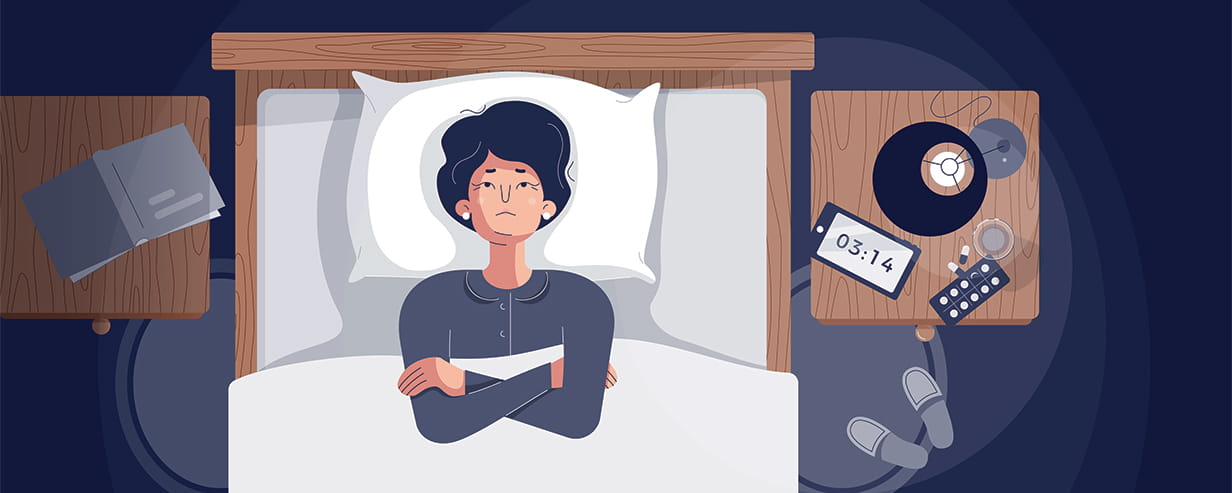
Waking repeatedly in the night and being unable to sleep again is the form of insomnia most suffered by older people. But there are ways to boost your chance of a better night’s sleep.
It’s 3am and you’re awake. You turn over, plump up the pillow, adjust the duvet and try a different position. You take a sip of water, realise you need the loo, tell yourself it can wait, then decide it can’t, and drag yourself to the bathroom. By the time you get back into bed, you’re wide awake and thoroughly fed up. However hard you try, sleep won’t come.
If this sounds familiar, you’re not alone. Doctors call it middle insomnia, or sleep-maintenance insomnia, and it’s especially common in older people.
“Sleep efficiency is undoubtedly more challenging as we get older,” says consultant neurologist Professor Guy Leschziner, professor of neurology and sleep medicine at Guy’s and St Thomas’ Hospitals.
Around half of older people report difficulty dropping off or staying asleep. Of these, sleep-maintenance insomnia, defined as multiple awakenings or prolonged wakefulness in the middle of the night, affects 50 to 70%.
“Typically, people report waking at 2, 3 or 4am and being unable to fall asleep again for hours,” says psychologist and sleep expert Dr Lindsay Browning of Trouble Sleeping.
“There are several destabilising influences on sleep that come with age,” says Prof Leschziner, author of The Nocturnal Brain: Nightmares, Neuroscience and the Secret World of Sleep.
“They include weakening of the brain circuitry that controls when we fall asleep, when we wake up and how stable sleep is, together with changes in the secretion of the sleep hormone, melatonin.
“Melatonin is the main chemical signal to the brain that it’s time to go to sleep and stay asleep. With age, its nocturnal peak is much lower, making it harder to maintain sleep,” he explains.
The experts at Saga Health Insurance have more about how our sleep changes as we get older.

Certain physical aspects of getting older play a role too. They include:
Medical conditions can also be culprits according to Prof Leschziner. Common offenders include:
“People with these conditions often feel as though they haven’t had any sleep,” says Prof Leschziner. In fact, this can be a trick of the brain, making you feel as though you haven’t slept a wink when you may actually have been drifting in and out of sleep.
Both experts agree that it’s best to not to lie there tossing and turning as this strengthens the association between bed and wakefulness.
“If you feel like you have been awake for about 20 minutes or more, it can help to leave the bedroom and go somewhere else,” says Dr Browning.
Prof Leschziner suggests sitting in dim lighting and doing something fairly unstimulating until you feel sleepy again. Dr Browning, meanwhile, recommends doing something “pleasant and engaging” to take your mind off not sleeping.
As she explains: “The aim is not to make yourself sleepier. It’s to take your mind off the fact you’re awake. This can reduce the link between bed, wakefulness and frustration, so that when you return to bed, sleep is more likely to follow naturally.”

And what shouldn’t you do?
One of the biggest mistakes is checking the time. “Calculating how much longer it is until morning, and how annoyed you are that you’ve woken up can increase anxiety, making it harder to go back to sleep,” says Dr Browning.
She recommends setting an alarm for the latest time you need to wake up. “If you wake in the middle of the night, ask yourself: ‘Has my alarm gone off yet?’ If it hasn’t, it’s not morning, and you can try to go back to sleep.’
Another thing to avoid is scrolling on your phone. This can make it harder to get back to sleep because it strengthens that connection between being in bed and being awake and mentally switched on, and secondly, because the content of what you scroll may leave you feeling alert, agitated or distracted.
Instead, she suggests trying a calming breathing exercise or what experts call cognitive shuffling: mentally listing random, unrelated words or objects to gently distract the brain.
Having something to eat in the middle of the night is not a good idea either, as it can train your body to wake up expecting food at that time. Instead try a light snack before bed, such as a piece of wholemeal toast with nut butter or a glass of warm milk.
And while we’re on food and drink, bear in mind that eating late in the evening, as well as caffeine and alcohol, are well-known sleep disruptors.

According to the British Geriatrics Society, it’s best to steer clear of sleeping pills if you can. Older people are more susceptible to their sedating effects, which can lead to daytime drowsiness and a higher risk of falls and serious injury.
The good news is there are plenty of non-pill options and, even if you have struggled with insomnia for decades, you can still improve your sleeping habits.
“Long-standing insomnia is often maintained by unhelpful behaviours and anxiety about sleep itself, and this can be changed,” says Dr Browning.
CBT-I (cognitive behavioural therapy for insomnia) uses a range of techniques to tackle the habits and thought patterns that keep insomnia going – such as going to bed earlier to compensate for sleep loss or worrying about how you will function the next day – as well as so-called sleep restriction or sleep compression.
These techniques involve working out how long you usually spend asleep then strictly limiting the time you spend in bed to that time. It sounds counter-intuitive to deliberately restrict your sleep to treat insomnia, but over time it creates mild sleep deprivation. “Eventually, the sleep pressure that builds up as a result stabilises your sleep pattern, enabling you to gradually increase the amount of time you spend asleep in bed,” explains Prof Leschziner.
The Sleepio app, which uses CBT-I, is recommended by NICE (National Institute for Health and Care Excellence) and is thought to be especially beneficial for over 65s.
What matters, both experts agree, is not to accept broken nights as something you have to put up with. Once you understand what lies behind them, small changes to your routine can make a real difference and help you back to more restful nights.
If poor sleep is causing anxiety, frustration or daytime fatigue, speak to your GP or a sleep professional.


Buy direct and start a new Saga Health Insurance policy by the end of 10 December 2026 to get your first 3 months free. T&Cs apply.
Underwritten by Bupa Insurance Limited.

Some Saga holidays include soothing or spiritual activities like joining a traditional tea ceremony in Japan, practising yoga in India or bathing in Iceland’s Blue Lagoon.

Are you retiring at the wrong age? The best age to retire for your body, brain, happiness and pocket.


Everything you need to know about the lung infection, and how you could be ill with “walking” pneumonia without realising it.

Strong calves for a strong mind: how they support our circulation and brain health, with easy moves to strengthen yours at home.


Our GP Dr Mark Porter explains what can cause itchy skin, which is a common problem as we get older.

Worried you’ve morphed into Victor Meldrew? Find out how to battle that bad mood, and what to do if you’re stuck with a grouchy loved one.

The benefits of heat and cold therapy, and how Nordic bathing won over our nervous writer.

Here’s how to spot the symptoms of heat disease and reduce your danger.


Everything you’re entitled to this year, when you can have it, and the gaps that remain.

Pilates for back pain – what to do if you are suffering, and five gentle exercises that could help.
Dizziness or vertigo: a sensation of spinning, can stop us doing everyday things for fear of falling. Try these tips to stop feeling dizzy


You don’t have to put up with bladder leaks. We try out the latest pelvic floor gadgets for men and women.

Cataracts are a normal part of ageing. Learn how to spot the signs – and when it’s time to consider surgery.