Are pomegranates the new superfood for older people?
We explain the 6 surprising health benefits of pomegranates as we age, and the easiest way to eat this curious fruit.
We explain the 6 surprising health benefits of pomegranates as we age, and the easiest way to eat this curious fruit.
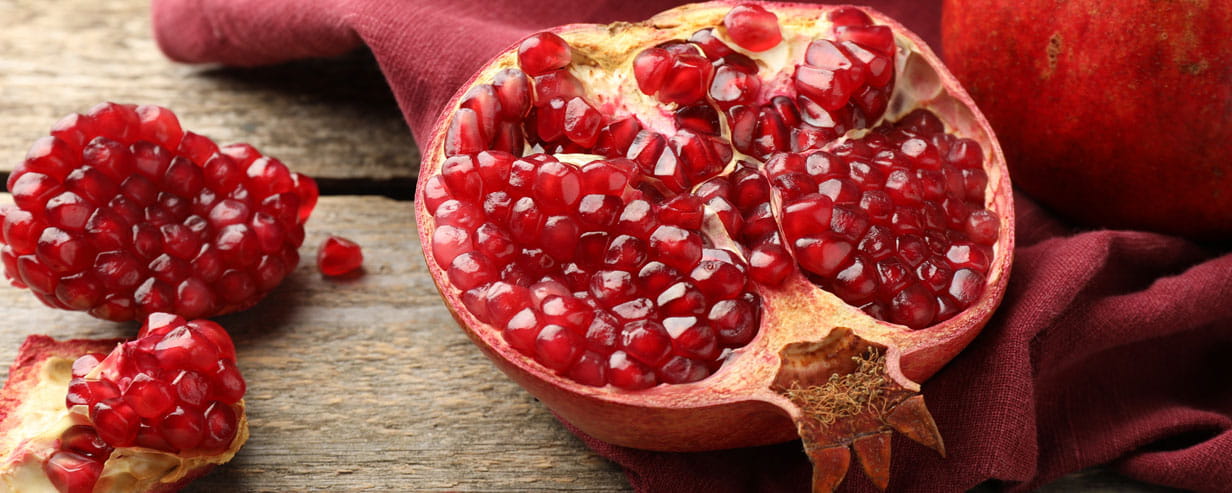
With their unique, bittersweet taste, those ruby-red, jewel-like seeds (known as arils) hidden inside the tough husk of a pomegranate contain a treasure trove of health-boosting properties.
Low in calories but high in fibre, antioxidants, vitamins and minerals, pomegranates are set to take centre stage in the wellness world.
New scientific studies have found that daily consumption can dampen inflammation, support cognitive and cardiovascular health, and provide a myriad of other wellness benefits as we age.
But the pomegranate’s high praise as a superfood isn’t new – it’s firmly rooted in ancient history. Believed to be the oldest fruit known to humans, the pomegranate was used by the Romans and the Greeks to help with digestive disorders, skin complaints, intestinal parasites and many other health complaints.
Public health nutritionist Summra Nasir says: “While modern research continues to highlight their benefits, pomegranates have been used for centuries in traditional and ancient medicine as a natural remedy for a variety of ailments.
“When my mum was growing up in Lahore in Pakistan, she had a pomegranate tree outside her house. She would pick a fruit each day and eat it, often being told by her mother that it was a ‘magic fruit’ that could heal you. At the time it sounded like a charming story but, looking back, there was real wisdom behind it.
“Rich in antioxidants, vitamins and anti-inflammatory properties, pomegranates truly have earned their long-standing reputation as a powerful and nourishing fruit.”

Most recently, research has revealed that regularly eating pomegranates might contribute towards lowering the risk of serious conditions such as heart disease, diabetes and cancer.
Another study focused on pomegranate juice and pointed towards its abundance of polyphenols, which can reduce inflammation markers in the body when one to two cups (250ml-500ml) are drunk per day.
And last year, research turned to pomegranate extracts, with a cohort of participants aged 55 to 77 taking the daily supplement for 12 weeks. They saw their inflammatory markers and blood pressure lower more than those in a placebo group.
Nasir says: “Pomegranates are packed full of vital vitamins, minerals, fibre and antioxidants – mainly polyphenols (anthocyanins) and punicalagins – that offer significant heart, anti-inflammatory and immune-boosting benefits.
“Various research suggests that daily consumption of pomegranate juice or seeds may help lower blood pressure, improve cholesterol levels and fight inflammation.”
The powerful antioxidants in pomegranates can help to protect the skin from damage caused by UV rays and pollution, while the fruit’s anti-inflammatory properties can calm redness and soothe irritation.
Nasir says: “Pomegranates are packed with vitamin C and K, which not only supports the immune system but aids collagen production – which, in turn, can help tone up the skin and give a radiant boost.”
Those valuable antioxidants in pomegranates also offer support to our overall heart health in myriad ways. They can help to prevent the oxidation of LDL cholesterol, which lowers the risk of plaque build-up in the arteries, and can also aid the relaxation and widening of blood vessels to support healthy circulation and blood pressure.
Says Nasir: “Pomegranates are believed to help the overall ageing process, as they support our heart health by lowering oxidative stress and bad (LDL) cholesterol levels, improving blood vessel function and modestly reducing blood pressure.
“A study on the effects of pomegranate juice highlighted its potential to lower plaque formation, thus lowering the risk of heart disease.”
Pomegranate seeds are rich in dietary fibre, which we know promotes a healthy digestive system and regular bowel movements. Those ruby-red arils are also proven to have prebiotic effects in supporting that all-important gut microbiome by increasing levels of beneficial bacteria.
Nasir explains: “Pomegranates are valuable for overall gut health due to their high polyphenol content, which boosts a healthy gut lining and microbiome.”

The fruit is rich in a group of plant compounds called ellagitannins (part of the polyphenol family), which can help to reduce inflammation in the body. But some studies have found that these compounds could also help protect the brain against Alzheimer’s and Parkinson’s disease by reducing oxidative damage and increasing the survival of brain cells.
Ellagitannins are converted by gut bacteria into a compound called urolithin A, which may have the ability to reduce inflammation in the brain and delay the onset of cognitive diseases, according to research by the US Department of Nutrition and Health.
Nasir says: “Pomegranates may support the brain as we age and cognitive decline accelerates. Various studies have found that the compounds in pomegranate seeds may improve memory performance, support blood flow to the brain and protect neurons from oxidative damage, though more research is still needed in this area.”
As we age, our muscles are more susceptible to oxidative stress, inflammation and less energy production, which can all contribute to sarcopenia (age-related muscle loss).
Alongside regular exercise, the combination of antioxidants, polyphenols and urolithins found in pomegranates can help to reduce chronic inflammation, preserve muscle strength and boost mobility.
A Cambridge University study found that regular consumption of pomegranate extract can also aid muscle recovery after exercise.
Pomegranates’ anti-inflammatory and antioxidant properties can support healthier, more flexible joints and stronger bones, according to research carried out by the University of Malaysia.
For rheumatoid arthritis and osteoarthritis sufferers, the fruit’s polyphenols can dampen inflammation and reduce pain and stiffness, while protecting cartilage from damage and slowing down the degeneration of joints.
The powerful plant compounds found in pomegranates can also protect bone cells from oxidative stress, decelerate bone loss and provide a vitamin C boost for collagen production, a vital component of bone structure.
Nasir explains the health pros and cons of pomegranate juice versus seeds: “While they are both beneficial in different ways, pomegranate juice is higher in antioxidants and plays a key role in supporting the heart and blood vessels. It’s also easier to consume daily and may help to lower blood pressure.
“The antioxidant potential of pomegranate juice is more than that of red wine and green tea, which is induced through ellagitannins and hydrolysable tannins.
“However, the cons are that the juice versions are stripped of the fibre and often higher in sugar, so can cause more sugar spikes. Always read the labels and consume as part of a balanced meal.”
Nasir adds: “The seeds or arils are higher in fibre, so help aid digestion and slow down the sugar release. For this reason, they may be a better option for diabetics.
“Pomegranate seeds have also been shown to support the gut microbiome and improve cholesterol regulation, though they can be harder to consume in larger amounts and are slightly lower in antioxidants compared to the juice version.
“So, both are beneficial but it depends on your goals. I'm all about wholefoods, so I would personally recommend the food-first approach.”

Nasir advises: “As a nutritionist, I always recommend consuming whole foods in their raw natural state wherever possible. Again, I’m all about the food-first approach, as it’s the whole package; fibre, antioxidants, vitamins, minerals and plant compounds working together synergistically in a way that supplements can’t replicate.”
She adds: “Why take a supplement when you can have the ‘real deal’ whole food? There’s no harm in trying it, but there’s no miracle supplement.
“Supplements may offer concentrated benefits, but the jury is still out as the evidence remains limited. And remember, they are there to support you and not to replace a meal.”
The NHS includes unsweetened pomegranate juice and seeds as part of our recommended 5-a-day fruit and vegetable intake.
One portion of daily fresh fruit is equivalent to eating the seeds of a whole medium-sized pomegranate or a 150ml glass of 100% juice.
While the fruit offers a bounty of health benefits for most people, the antioxidant content can interact with certain heart and blood-thinning medications.
The natural sugars in pomegranates could also affect blood sugar if consumed in excess, and the seeds pose a choking hazard to young children and adults with difficulty swallowing.

Summra Nasir shares her favourite three pomegranate dishes.
Add a handful of walnuts and two tablespoons of crushed flaxseeds to a bowl of yogurt and arils, and drizzle with a little honey to finish off.
If you can make your own hummus, brilliant. Otherwise, top a shop-bought dip with pomegranate seeds and parsley (dried or fresh), sprinkle with black crushed pepper and paprika powder, and add a drizzle of olive oil.
Chop some gem lettuce, cucumber and red onion, and mix together with pomegranate seeds and chopped-up feta cheese. Add an olive oil, lemon and sea salt dressing. This is perfect for the spring and summer months ahead.
The once-exotic fruit is available in most supermarkets and grocers, but some of us find ourselves a little put off by the faff of extracting the seeds. Thankfully, gone are the days where we had to painstakingly eat our pomegranates with a pin.
This method from Prue Leith promises to be mess-free, quick and easy. Here’s how she does it:
(Hero image credit: Getty)


Some Saga holidays include soothing or spiritual activities like joining a traditional tea ceremony in Japan, practising yoga in India or bathing in Iceland’s Blue Lagoon.

Buy direct and start a new Saga Health Insurance policy by the end of 10 December 2026 to get your first 3 months free. T&Cs apply.
Underwritten by Bupa Insurance Limited.

Expert nutritionists break down the most important foods to eat in each decade as we get older.

We reveal the 7 best tinned foods to supercharge your health while saving you time and money.
From ketchup to mayo – how healthy are your sauces? We find out the pitfalls and surprising benefits of our favourite condiments.

Could honey be the sweetest way to supercharge your health this year? Our experts explain the benefits and which to buy.
Our expert guide to the common foods you shouldn't mix with prescription drugs.

Experts reveal whether chilled supermarket soups are worth the extra cost and if some flavours are better for you than others.

Looking after your gut health could be one of the biggest things that you can do for your overall health. Here are the best foods to keep your gut happy.
The foods that could help you live longer and protect against chronic illness.


A dietician reveals which foods can help protect vision and prevent age-related eye conditions.
Everything you need to know about protein, from how it benefits your body to the best high-protein foods – and how much you really need.