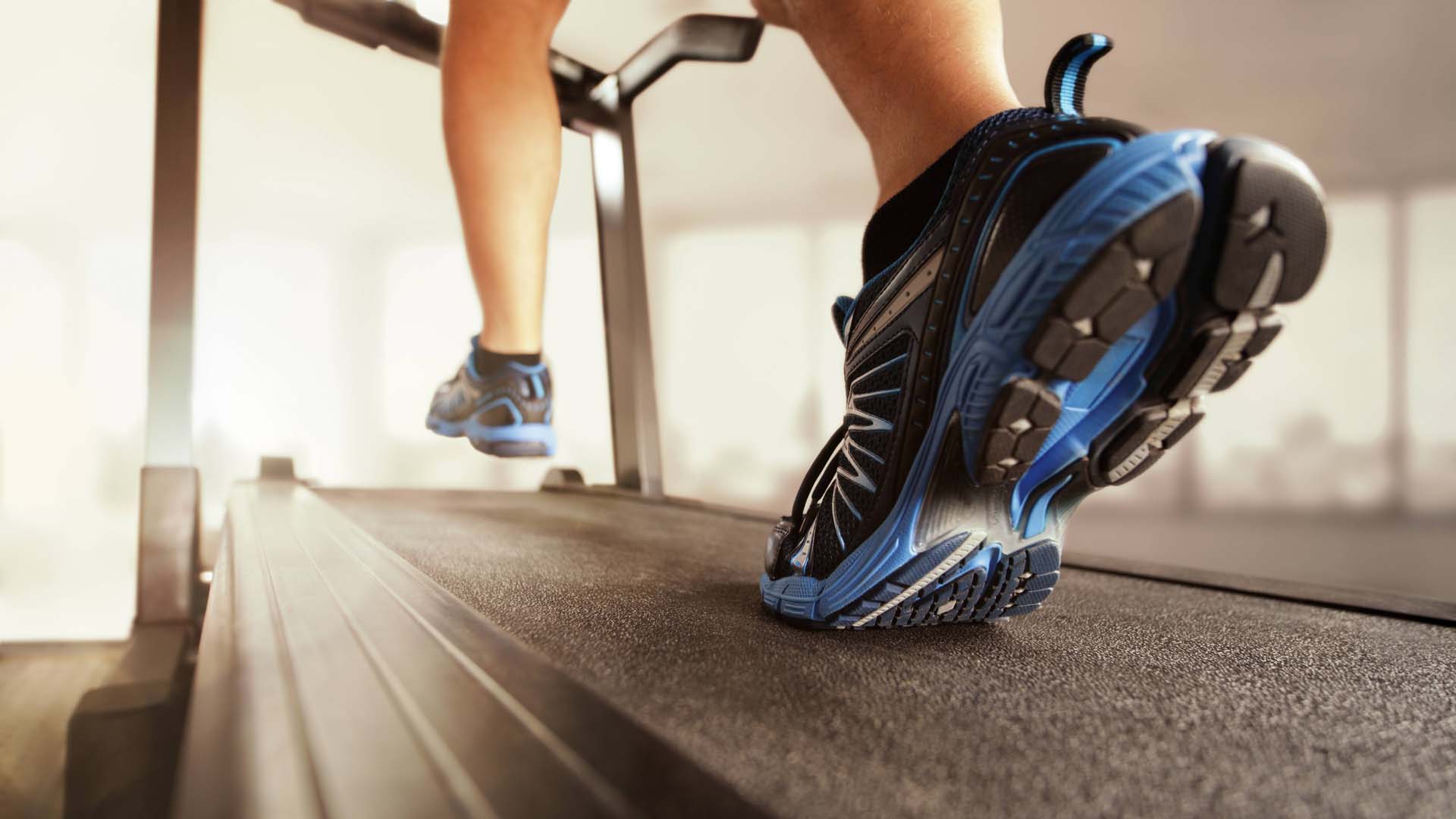
Why your running form matters and how it should look
Ensuring you have proper running form will help you feel more comfortable and reduce your risk of injury.

Image credit: Shutterstock/SeventyFour
Ensuring you have proper running form will help you feel more comfortable and reduce your risk of injury.
Your running form is an important consideration to help you run more efficiently.
Remembering a few key points while you’re training can make your run feel more comfortable, reduce your risk of injury and even increase your speed.
If you’ve ever watched an athlete run, they’re not slouched over or flailing their arms about, they’re gliding along with their body aligned in an upright position, landing with minimal force – that’s the proper running form you should be aiming for.
Having said that, we can’t guarantee you’ll be as fast as Usain Bolt when you achieve the correct form, but we’ve got some tips to help you improve yours, so you can run more fluently every time.
Posture and running efficiency are closely linked. If your back isn’t straight and your shoulders are tense, you’ll be wasting energy, which will make you feel fatigued.
Before you set off on your run, check your body is in alignment. Your head and spine should be neutral (your natural position when you’re standing), and shoulders relaxed. If you’re feeling a little tight, try a few shoulder rolls to help release any pent-up tension.
Running coach Mike Griffin says we should also remember to look up when we’re running.
“Avoid looking at your feet and instead look straight ahead. Not only is this good running form, but it’s also safer because you can see what’s coming to avoid falling over.”
You could also add in some training time on hills to help improve your running form. Because they take a little more concentration, they can fast-track improvement.
Focus on a spot two metres (6ft 7in) ahead, keep your hips high, lift your knees as you run and drive your arms.
Standing on one leg while you clean your teeth can be a quick way to build your core muscles, which keep you in an upright, neutral position. Stand for one minute on each leg twice a day.
Wearing sunglasses when it’s sunny stops you from squinting and tightening your neck muscles, which will affect your form.
Having your hands at waist level and your arms at a 90-degree angle can help make running feel smoother. Just remember to avoid keeping your hands too close to your chest.
This can make you feel tired quicker, as you tense your muscles. As you run, your arms will naturally move forwards and backwards, and your fists might naturally clench into a ball with the effort you’re putting in, but try to keep them unclenched.
You want to be loose and relaxed, not tense and tight. A quick way to check your hands are relaxed is to hold empty loo roll cylinders in each hand as you run. Your mission? Not to crush them. Doing this will keep your hands in a relaxed position and stop your arms from tightening up.
Efficient runners tend to land in a position that’s quite close to underneath their body, says Run Lab physiotherapist Lou Nicholettos.
“They also keep a slight bend in their knee. This landing position and knee bend mean that their leg acts as a spring and the body is propelled forwards with minimal effort.”
Spend some time thinking about how it feels when you land and pay attention to what your legs are doing.
It might be useful to slow down your pace so you can practise this. If it feels like a lot of effort, try taking smaller steps, as you could be overstriding and putting your leg too far in front of your body when you land.
Make sure your foot strikes the ground under your knee and not in front of it. If you use your legs wisely and minimise force, you’ll find you have more energy and power to run further and faster.

Having the correct running shoes for you is vital to reduce injuries. The shiniest new pair of shoes is not necessarily going to be the best for your feet, even if everyone else seems to have them.
The easiest way to find your perfect pair is to get your gait analysed.
“This involves running on a treadmill for 20–30 seconds in front of a camera wearing a neutral shoe,” Griffin explains.
“In-store experts will then show you a frame-by-frame replay using the footage, to help you find the best running shoes based on what they’ve seen.”
Lots of running stores offer this service for free, such as Runners Need, so pop into your nearest one and have a chat with them.
Running causes our respiratory system to work a lot harder as, to do the exercise, our bodies need more oxygen to give us energy. Our lungs work to then remove the carbon dioxide that is produced, which makes our breathing increase, leaving us feeling ‘out of breath’.
If you can learn how to coordinate your breath with your foot strike, you’ll help reduce stress on your body, which can make your run feel easier.
A popular breathing tool for runners is rhythmic breathing, which involves landing alternately on your feet at the beginning of every exhale (breathing from your diaphragm) ensuring your body evenly absorbs the impact of every strike.
Try this three-two breathing pattern when running at an easy pace: three steps as you inhale and two steps as you exhale, keeping your upper body in an upright position so your lungs can fully expand.
When you run at a faster pace you might find you need to adjust your breathing rhythm and switch to a two-one pattern: two steps as you inhale and one as you exhale.
Practising rhythmic breathing will ensure your exhalation is not always on the same side, reducing the pressure on your body, for a more comfortable run. It will also help you achieve proper running form, as you’ll be focusing on your posture alongside your breathing.
It might feel like it’s a lot to remember, so just take it one step at a time. Nicholettos says:
“There isn’t really such a thing as ‘correct’ running form, rather there are principles of good technique that we can aim towards and technique characteristics that good runners tend to share.
“Good running form moves a runner from A to B as efficiently as possible, whilst minimising pressure on joints.”
So don’t worry about trying to do it all at once. Take one point and work on it for a few weeks, and add in the others gradually from there, to find your perfect proper running form – and don’t forget to warm up and cool down.


Rekha Mistry shares her top vegetables to grow in your garden all year round.

We explain the science and have 7 of the best scented plants for your garden.
From robot mowers to electric pruning shears, spruce up your outside space with four of the best garden gadgets

Our expert pruning and watering hacks include a top tip to keep them flowering from Alan Titchmarsh.

The experts explain the best ways to look after our feathered friends.

Blighted by buzzing? How to keep wasps out of your garden without harming them so you can enjoy the summer.
Expert advice on how to avoid neighbour disputes, fines or even prosecutions.


Everything you need to know about Japanese knotweed, the fast-growing plant nobody wants in their garden.