8 historic British laws you can still get fined for breaking today
From painting your door pink to catching a sturgeon, the surprising old laws which are still on the books and could land you in trouble.
Britain is a proudly eccentric nation. We run marmalade competitions, skip around maypoles and hold on to laws that have lingered for centuries.
“Times change, but laws do not always change with them,” says Professor Ian Williams, tutorial fellow in law at St John’s College, Oxford, and editor of the Journal of Legal History.
“Changing the law takes time and energy. Lawmakers see making new laws as more valuable. An old law might be forgotten, but that doesn’t mean it has gone," warns Williams.
Flat-pack furniture, a bit of DIY, a trip to the garden centre, they all sound innocent enough.
But if you carry a ladder, plank or pole along a London pavement in a way that obstructs passers-by, you may be breaking the Metropolitan Police Act 1839.
The law was intended to manage crowded Victorian streets. “The Act was brought in just ten years after the formation of the Metropolitan Police Service,” says Steve Gaskin, a former detective chief inspector turned criminal psychology lecturer.
“It gave them more power.” Parliament decided that anyone carrying bulky objects on a footway risked causing an obstruction.
The Licensing Act 1872 was introduced because Victorian Britain was getting a bit too merry: rowdy pubs and a booming temperance movement pushed the government to restore order. It applied to England and Wales, and included a clause that banned people from being “drunk while in charge of” a carriage, horse or cattle. In 1872 you could be fined up to 40 shillings or spend a month in prison.
Today, a drunk and incapable charge, established under the Licensing Act 1902 in an amendment, can still cost you a fine or a night in the cells. “It has a social element because you would often take someone into custody for their own protection,” says Gaskin, who’d occasionally stumble upon a drunk celebrity while serving.
Parts of the 1872 Act are unchanged, so you can still get in trouble for being drunk in charge of cattle.
In 2004, a fisherman named Robert Davies landed a 10ft-long, 264lb sturgeon in Swansea Bay. Davies did what any right-thinking fisherman would do: he contacted Buckingham Palace.
According to a royal statute dating to 1324 – the Prerogativa Regis, issued under Edward II – whales and sturgeon in British waters are “royal fish” so they belong to the Crown.
After the Palace told Davies he was free to do as he wished with the fish, he took it to Plymouth to sell at auction. He then got in trouble because sturgeon is a protected species, making its sale illegal, regardless of royal permission.
In the late Seventies, Gaskin was on patrol in central London when he came across a porter from a block of flats beating a doormat in the street before 8am.
Gaskin knew this was against the Metropolitan Police Act 1839, which had been brought in to temper the chaos of Victorian London. The law gave police broad powers to crack down on everyday “nuisances”, from reckless carriage driving to flying a kite in the street.
Gaskin went over to tell him. “He knew I was joking,” he says. “I’d see this guy regularly afterwards and he’d say, ‘What are you going to catch me for now, standing on the cracks of the pavement?’”
Former history teacher Jonathan Carley was recently caught slipping into a Remembrance event in Llandudno dressed as a Royal Navy rear admiral, despite never holding the rank.
His real identity was uncovered when former and serving personnel spotted that he was wearing a rare Distinguished Service Order and carrying a sword.
Carley had broken the Uniforms Act 1894, which makes it illegal to wear the marks of His Majesty’s Forces without permission. He pleaded guilty and was fined £500, plus costs and a surcharge.
If you’re dressing up for a play or taking part in a historical reenactment, you should be okay.
In 2015, a widower in Worksop, Nottinghamshire, received a £160 bill after his late wife’s funeral ran over. The family had arrived at the cemetery 45 minutes late. Frank Blades then stayed on at the graveside. The fine was an overtime charge passed from the council to the funeral director because gravediggers had to stay beyond their contracted hours. This had been added to the widower’s invoice.
Cemeteries operate under local authority regulations and the Local Authorities’ Cemeteries Order 1977, which allows councils to set their own rules and fees for burials, including charges when staff must work beyond scheduled hours.
You might think that renovating your own barn or roof space is a matter between you and your builder. But if a bat has been using it, the law – if not the bat – might have something to say.
Under the Wildlife and Countryside Act 1981 and the Conservation of Habitats and Species Regulations 2017, all 18 species of bat in the UK are strictly protected. This includes their roosts, even when the roost is empty. Destroying one is an offence.
“Bat roosts are very sensitive to disturbance,” says the Bat Conservation Trust. “These sites are legally protected because bat populations have suffered significant historical declines.
"Apart from being an important part of our natural heritage, they are vital for farming as they feed on insects.” Offenders can face prison sentences and substantial fines.
Last year, nearly 200 reports of bat crime were made to the police. Before doing any building work, check whether you have lodgers you weren’t aware of.
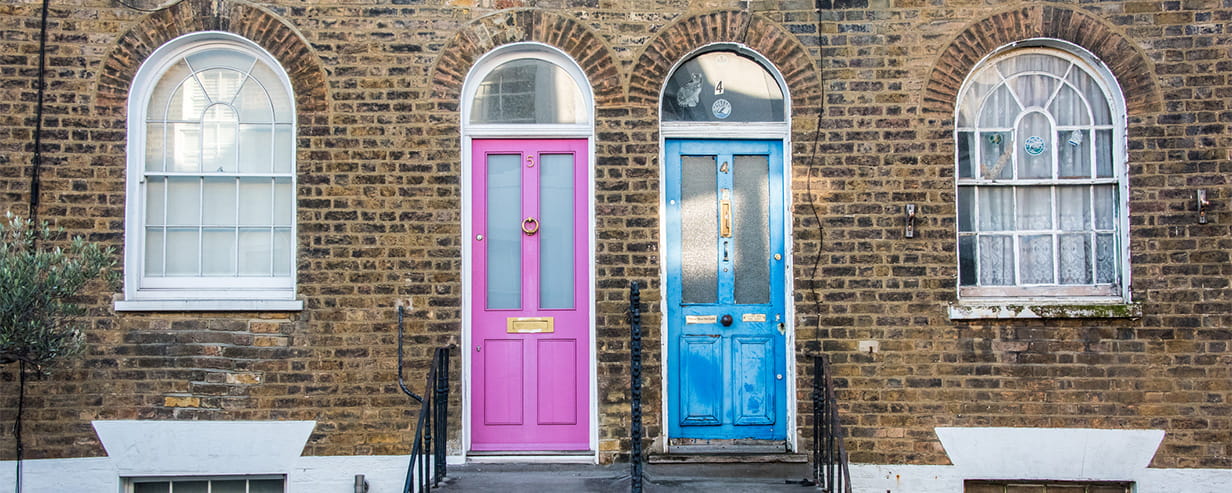
In December 2021, Miranda Dickson painted the front door of her listed Edinburgh townhouse a bold, bubble‑gum pink. Months later, an anonymous complaint triggered an enforcement notice warning that the colour was “not in keeping with the historic character” of Edinburgh’s New Town. Ignoring the order could carry a £20,000 penalty. She repainted the door green and applied for permission, but that was rejected too.
Determined not to give up, Dickson tried again with a much paler pink. After more objections and months of wrangling, planners finally approved the softer shade in 2023.
“Most people would be surprised that painting the exterior of their house is a development requiring planning permission,” says Nigel Hewitson, partner at Davitt Jones Bould. Under Section 9 of the Planning (Listed Buildings and Conservation Areas) Act 1990, this is a strict liability offence.
Pleading ignorance won’t help. The penalty is an unlimited fine and up to two years in prison. There is no time limit on how long a council can wait before acting.
Britain has around 400,000 listed buildings. Check your building’s status before picking up a paintbrush.
Pruning trees and cutting hedges? Check you’re not breaking the law in your garden.
Laura Silverman is a freelance journalist. She has chased news leads for the Sun, written arts reviews for The Times, interviewed politicians for Country Living and edited features for the Telegraph. She has also written books about wild swimming and Mary Shelley.
View author page
Whether you're looking for straightforward insurance or cover that's packed with extras, our home insurance has plenty of options for people over 50.
Saga’s boutique ship Spirit of Adventure will be truly living up to her name in January 2027, circumnavigating South America in all-inclusive luxury on a 73-night cruise.
Taking in vibrant cities like Rio de Janeiro, Chile’s Lake District, the Panama Canal and the Caribbean, this voyage promises to be a once-in-a-lifetime adventure.
Try these simple tips and fixes for Saga’s crosswords, sudoku and codeword.
With the start of the new financial year on 6 April, our money expert explains the changes to your pension, benefits and taxes.