Why do we say "break a leg"? Susie Dent on theatre's role in our everyday phrases
From winging it to off-the-cuff remarks, our columnist explores the words and expressions that began life backstage.

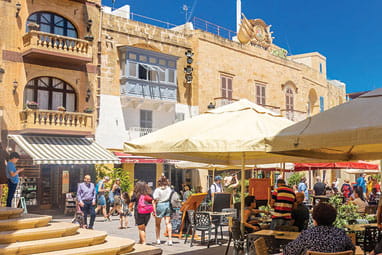
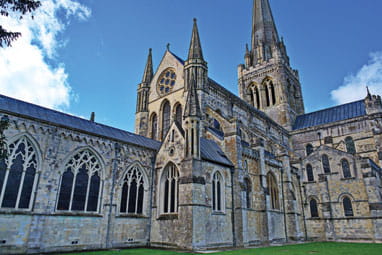
I’ve devoted many a weekend this year to touring my show Word Perfect, and am loving every minute of it. Not just because of my audiences – ever curious about the stories of our vocabulary, and certainly up for a laugh at the expense of other people’s typos – but also because of the gorgeous theatres up and down Britain that I’ve been lucky enough to visit.
Looking out at their velvet seats and sumptuous ceilings has convinced me that we need to cherish these special venues more than ever, steeped as they are in their community and local history. And, indeed, in our language, where the echo of the stage can also be heard.
Some theatrical sayings are simple code between actors treading the board. "See you on the green", for example, is the customary way of saying "see you out there". Why green, you might wonder? The answer lies in the Cockney rhyming slang "greengage/stage".
That is also why any actors, or guests on TV shows, are allocated a ‘green room’ in which to relax. As it happens, the colour green is said to be particularly soothing when it comes to pre-performance nerves.
‘Break a leg’ seems a curious way of cheering someone on as they step out from the wings but superstition dictates that it is unlucky to say the words ‘good luck’ to a performer. There have been dozens of theories as to where this expression comes from, ranging from the side curtains that frame the stage (known as ‘legs’), to such a successful performance that the cast must repeatedly curtsy or bow to the rapturous applause at the end of it.
Most plausible is an earlier German expression "Hals - und Beinbruch!", which ups the ante and urges an actor to not just break a leg, but their neck too.
Other phrases have shuffled across to the mainstream while still hanging on to their thespian roots. "Winging it" is a nod to the prompters who whisper an actor’s forgotten lines from the wings. Similarly, any "off-the-cuff" remark is down to an actor writing their lines on their sleeve lest they need a nudge.
But some of our words hide their beginnings a little more successfully. Take "exploding": not something you expect in a performance unless we’re talking blockbuster movies. Yet "explode" is directly linked to applaud, since both are descendants of the Latin plaudere, to clap.
However, explaudere was not something any Roman actor would wish for since the ex means ‘off’ and the clapping was intended to expel a poor actor off the stage. Presumably Roman audiences made such a racket that they pushed the meaning of "exploding" into the realm of literal detonation.
Some of us like nothing more than "slapstick" in a theatre, a comedy that takes its name froma device gleefully brandished by clowns looking to slap it noisily against their unfortunate victim’s backside. This led frequently to a "pratfall", or a fall on the bottom, since that was the earliest meaning of "prat" (strictly speaking, it was a single buttock, but who’s counting?).
Susie Dent is a lexicographer, best-selling author, broadcaster and Saga Magazine columnist.
This year, Saga is celebrating an incredible 75 years – and we’d love you to be part of the celebrations. For a limited time only, you can subscribe to Saga Magazine for just 75p an issue.
Receive the next 6 print editions delivered direct to your door, plus 6 months’ unlimited access to the Saga Magazine app – perfect for reading on the go.
Try these simple tips and fixes for Saga’s crossword, sudoku and codeword puzzles.
With the start of the new financial year on 6 April, our money expert explains the changes to your pension, benefits and taxes.