Paul Lewis: what you need to know about working past pension age
More people than ever are working in their retirement - and it's not just for financial reasons. Find out the benefits and tax implications.

More people than ever are working in their retirement - and it's not just for financial reasons. Find out the benefits and tax implications.
More pensioners than ever are working. The latest figures show that more than two million people are employed or self-employed after the age of 66, which until last month was state pension age. That number has increased by 12% in four years and more than one in six pensioners are now still working.
Exclusive figures worked out for Saga by the Centre for Ageing Better reveal that over 600,000 are working in their seventies and more than 105,000 past 80. Its research also found that around two thirds of these older people work because they enjoy it or to keep healthy.
The others work for financial reasons. About one in five work because the money gives them a better life and the remaining one in seven say they cannot afford to live without working.
For the growing number of older people who live alone, work can be a good way to meet people and socialise. It also provides a sense of purpose, and the physical and mental demands of work can help slow down the ageing process.
For pensioners, work does not have to mean 40 hours a week and a long commute. Figures from the Office for National Statistics show that only about a third of workers over pension age are full-time. Part-time employment can be a gentle slope away from full-time work when the cushion of your state and other pensions means you can boost your income and keep active.
That other income means many retired people are willing to work for less. Economists call it the ‘reservation wage’ – the minimum amount you need to be paid for an hour’s work to make it worth giving up an hour of leisure time. Remember, since 1 April you must be paid at least £12.71 an hour.
There is also quite an army of older people who work for nothing. Around a quarter of 65 to 74-year-olds volunteer at least once a month. Whether it is helping in a food bank or guiding people round a stately home, if you can afford to work for nothing more than perhaps travel expenses and a cup of tea, volunteering is a great way to keep active and involved, with the advantage of greater flexibility than paid work gives.
More than half a million people over pension age take up self-employment, often using the skills they learned in a lifetime of work to sell their services and be in control of their own working hours. Whether it is doing accounts, teaching, gardening or decorating, your skills can be a useful source of extra cash.
If you earn more than £1,000 in a tax year you must tell HMRC by 5 October in the tax year after you start your self-employment and you will have to fill in a tax return. There may be tax to pay on your earnings, so always set some aside to pay it.
The experts at Saga Money have 9 ways to earn extra cash after you retire.
The state pension is taxable but is paid gross without any tax being deducted. HMRC collects the tax due on it by taking extra tax off your earnings or other income such as a company or personal pension. It does that by reducing the tax code – the letters and numbers that your employer uses to look up how much tax to take off your wages before handing them over. Your state pension will use up most or even more than your tax-free personal allowance, so you won’t be able to earn much before tax is due on it.
If you get means-tested benefits, such as pension credit, council tax reduction or housing benefit, then any wages you earn will reduce the amount you get. Carers must take care not to earn more than £204 a week or they will lose their carer’s allowance.
Working pensioners have one big financial perk – National Insurance contributions end when you reach pension age. If you are an employee, they stop in the week of your birthday, so check that your employer knows your age! Self-employed people pay them until the end of the tax year in which they reach pension age.
Many pensioners work by staying in the job they already do. No one can be sacked for reaching a certain age but there can be age restrictions on certain jobs. And if age or illness means you cannot do the job properly, your employer can begin the process of asking you to leave. People over pension age qualify for redundancy payments the same as younger ones do.
Finding a new job even in your fifties can be challenging. Ageing Better found that more than one in three people aged 50 to 69 felt their age was a disadvantage when applying for jobs. Many of the women whose state pension age was raised from 60 to 65 or 66 have reported their struggles to find work to fill the gap left by the missing state pension – 57 is the average age at which employers consider candidates are too old for a job. Discriminating against them because of their age is unlawful in the UK, but there is no doubt it happens.
Ageism is bad for employers too. Research reported by Ageing Better found businesses with a higher share of employees over the age of 50 are more productive and that workforces with a good mix of ages are more innovative. There is also a lower turnover of staff at firms that have more than 10% of workers aged over 50.
Flexible working - all you need to know
If you can work or volunteer there is no doubt it helps improve wellbeing and promotes a healthy body and brain, and paid work helps your finances. It can also challenge the prejudices of younger people. So, if you can, go for it!
Find out more information on the statistics as well as advice for older workers at the Centre for Ageing Better.
Hero image credit: Eliot Wyatt


Why settle for less? Switch up your savings with true easy access and a great rate:
In partnership with NatWest, designed for people over 50. Interest paid monthly.
New customers only. UK residents only.

This year, Saga is celebrating an incredible 75 years – and we’d love you to be part of the celebrations. For a limited time only, you can subscribe to Saga Magazine for just 75p an issue.
Receive the next 6 print editions delivered direct to your door, plus 6 months’ unlimited access to the Saga Magazine app – perfect for reading on the go.
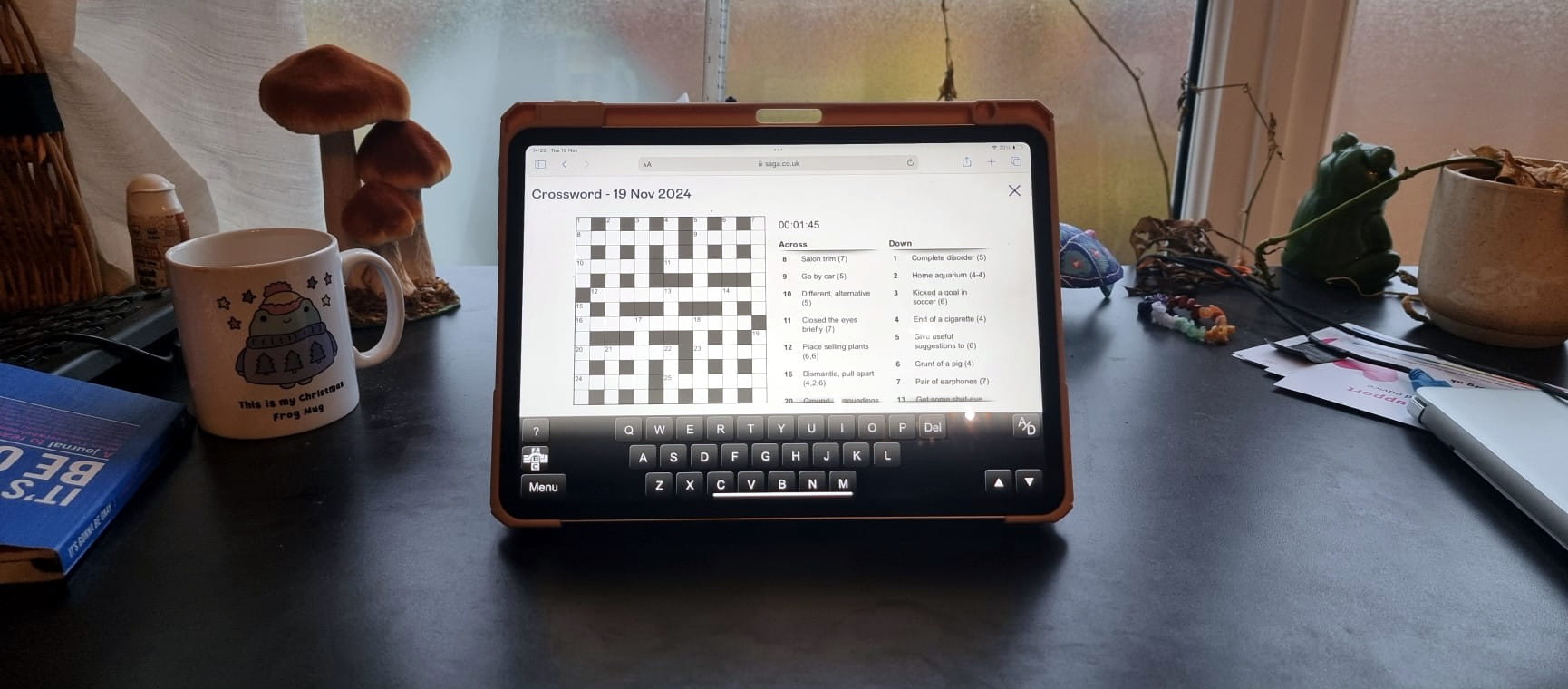
Try these simple tips and fixes for Saga’s crossword, sudoku and codeword puzzles.

With the start of the new financial year on 6 April, our money expert explains the changes to your pension, benefits and taxes.