The law change that could benefit unmarried couples
Paul Lewis on proposed changes to give cohabiting couples greater rights in the event of death or break up.
Eliot Wyatt
Paul Lewis on proposed changes to give cohabiting couples greater rights in the event of death or break up.
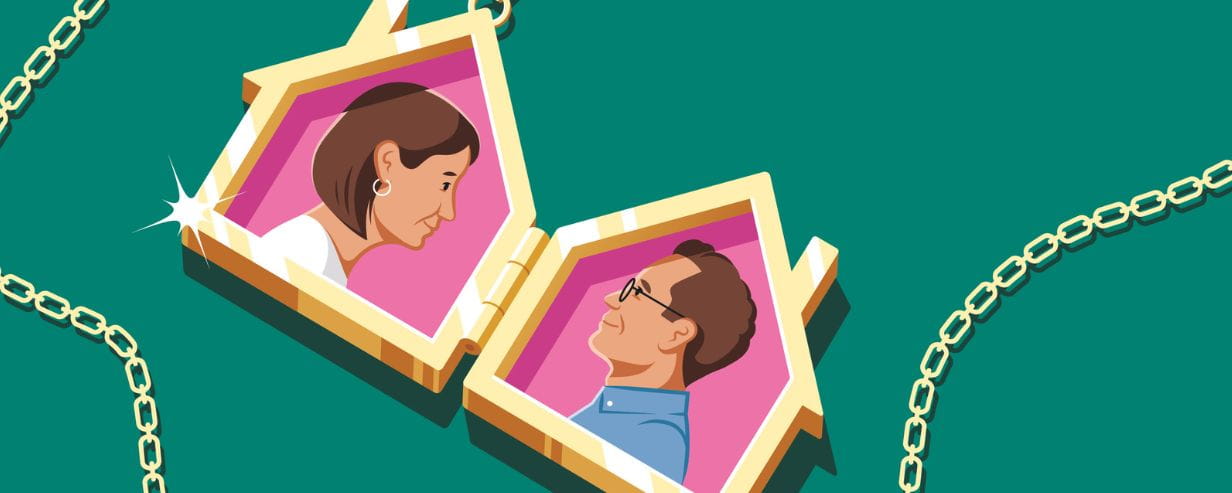
Do you live as a couple in a common-law marriage? The answer is no, you do not. Because there is no status of common law marriage in England and Wales. You are either married (or civil partnered, which gives identical rights) or you are not.
And if you are not then you have no rights over your partner’s property or money. If you split up, even after 20 years and four children, you have no rights to financial support or a share in the house you may have lived in together, cared for, decorated, and improved, if it is in your partner’s name.
Even on death, if there is no will, an unmarried partner is not on the list of people entitled to inherit or deal with their beloved’s estate. However, the government is consulting on giving unmarried couples in England and Wales some rights if they split up or one dies.
They would not receive the same rights as a bereaved married partner – the government says it wants to preserve the distinct legal status of marriage – but they will be a lot better off than they would be now. Living together is growing fast.
Official figures say there are 3.5 million cohabiting couples and numbers from the Office for National Statistics in 2024 show that more than one in ten who cohabit were over the age of 60, around 750,000 people.
The government proposes to define cohabitation as a couple living together in what it calls a ‘romantic, committed, long-term interdependent relationship’ for at least three years, or any duration if they have children together.
After that they will receive some limited rights to the other’s property and support if the relationship ends.
There will be no 50:50 split, which is the starting point when a marriage ends. Instead, the court will look at what is fair given the needs of the two ex-partners and especially any children they may have so that there is a stable home for them to grow up in.
These rights will not be automatic – one partner will have to go to court to assert them and do that within two years of the relationship ending.
All these changes to give more rights – and indeed property – to an unmarried partner would inevitably take away rights from children and other relatives. The government says any changes will do that fairly.
This new ‘cohabitation framework’ will only apply to those who could marry but choose not to. It will not extend to two siblings who live together or two people still married to others.
Where there is no will, a bereaved unmarried partner currently has no rights to any of their late partner’s property, goods, or money. Under the rules of intestacy, the dead person’s relatives currently inherit or share their estate.
First in line are offspring. If there are none, the inheritance passes next to any living parent, then any siblings, any grandparent, any aunts or uncles or nephews or nieces. Failing that it goes to the Crown – the King or the Prince of Wales.
A cohabiting partner has no place on this list. But in a married or civil partnered couple, the spouse takes the whole estate unless there are children and it is worth more than £322,000 when the surplus is shared between them.
The government proposes giving a cohabiting partner the rights that a spouse now gets. But the qualifying period of cohabitation will probably be longer – five years is suggested and perhaps two if they have a child together.
A surviving partner would also get the right to administer the estate, which automatically goes to a spouse but not an unmarried partner. All these changes to give more rights – and indeed property – to an unmarried partner would inevitably take away rights from children and other relatives.
The government says any changes will do that fairly. Of course, all these current intestacy problems are solved by simply making a will, which all cohabiting adults should do – you never know when death might reach out.

The proposals make no mention of inheritance tax except to say it is not included. A spouse or civil partner can inherit everything from their spouse with no inheritance tax due – an unmarried partner, however long-standing, cannot and pays the 40% tax on anything they inherit over £325,000.
That would not change under the government’s plans. So it will be possible for a cohabiting partner to have the right to inherit, for example, a valuable home they had shared, but then find they have to pay inheritance tax just to continue living there.
The answer to those problems of course is to marry the one you love – possibly the nicest piece of tax planning you can ever do!
The consultation also looks at the rules about divorce or the dissolution of a civil partnership.
It would make nuptial agreements about how money and property are divided on divorce legally binding but only if they were signed willingly, without coercion and with each party having independent legal advice and making a full disclosure of their financial state to the other.
The change would apply equally to pre-nuptial agreements (pre-nups) and those made during the marriage (post-nups). These agreements are currently only binding if the court decides it would be fair to enforce them.
The government hopes to make the changes in the next few years. They will only apply to England and Wales. The law in Northern Ireland is almost identical, but there are no plans to change it.
In Scotland, cohabiting partners have had some legal rights for 20 years and a review is under way. Entitled A fairer end to relationships – it also details how to respond (deadline 14 August).

Why settle for less? Switch up your savings with true easy access and a great rate:
In partnership with NatWest, designed for people over 50. Interest paid monthly.
New customers only. UK residents only.

This year, Saga is celebrating an incredible 75 years – and we’d love you to be part of the celebrations. For a limited time only, you can subscribe to Saga Magazine for just 75p an issue.
Receive the next 6 print editions delivered direct to your door, plus 6 months’ unlimited access to the Saga Magazine app – perfect for reading on the go.
Try these simple tips and fixes for Saga’s crossword, sudoku and codeword puzzles.

With the start of the new financial year on 6 April, our money expert explains the changes to your pension, benefits and taxes.