Can’t sleep on a plane? 6 expert tips to help you rest on a long flight
Struggle to sleep on planes? You don’t have to sleep perfectly — these expert tips will help you rest, stay comfortable and arrive feeling far less exhausted.
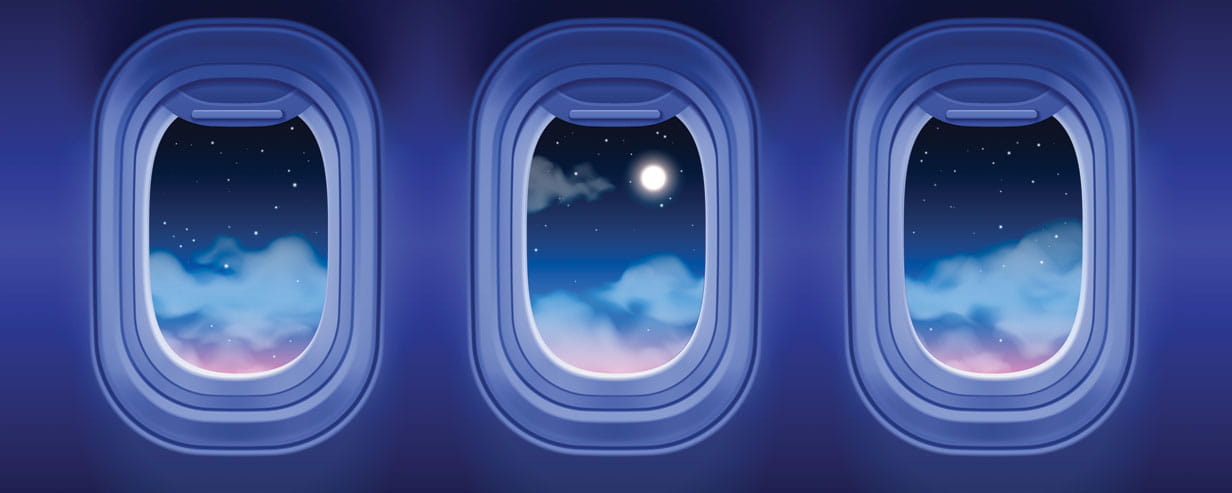
There’s a particular kind of optimism that comes with boarding a long-haul flight. This time, you tell yourself, you’ll sleep. You’ll wake up calm, hydrated and ready to glide through arrivals.
Then the cabin lights stay on, your neighbour claims the armrest, your neck pillow fails in its only job and you spend 15 hours watching a tiny digital plane crawl across the map.
The good news? You don’t have to sleep perfectly to make a long flight feel better but you do need to work with your body, not against it.
There’s a lot going on in a very small amount of space, so it’s no wonder it can be hard to drop off on a plane.
“You’re fighting constant white noise, dry cabin air, restricted movement, occasional turbulence and a disrupted body clock,” says counsellor and wellness expert Shelly Dar. “Even when you are physically exhausted, your body’s natural defence systems often stay on high alert.”
And it’s not just the noise and lack of leg room, our brains can also struggle to rest in unfamiliar places.
“A part of our brain naturally stays watchful in unfamiliar surroundings,” explains Dar. “It’s an evolutionary safety mechanism, but it means your sleep remains light and easily broken, even when you desperately want to switch off.”
The experts say it is possible to sleep, or at least rest well on a plane. We've got six tips that will help you arrive at your destination feeling less exhausted after a long flight.
“Sleep is a shy visitor,” says Dar. “The more pressure you put on it to appear, the further away it retreats.”
Her advice is to shift the goalposts and stop trying to force sleep. Instead of trying to force sleep, your focus should be on resting.
“Closing your eyes and resting quietly still allows your nervous system to recover and recharge, takes the pressure off, and ironically, often lets sleep slip in naturally.”
Michael Baah, a celebrity strength coach and frequent flyer, agrees that the key to surviving a long-haul flight is accepting that sleep will probably be broken.
“I aim for controlled rest, through short periods of sleep, an eye mask, a neck support and limiting caffeine at the wrong times,” he says. “Even partial rest reduces how hard the landing feels.”
Sleep is strongly influenced by routine and familiar cues. At home, your brain knows bedtime is coming because the same small things happen in roughly the same order. On a plane, most of those cues vanish.
You can still build a miniature wind-down routine – go and brush your teeth, read a few pages of your book or put on an eye mask. Dar advises packing a small comfort kit in your hand luggage, with products you use at home.
“The brain responds beautifully to familiarity,” she says. “A simple routine: applying a familiar-scented hand cream or lip balm, using a hydrating face mist, or having a favourite mint, creates a micro-environment of safety in a sterile cabin.”
Your long-flight survival kit:
The in-flight wine may feel like a shortcut to sleep, but the evidence suggests it’s more of a false friend: it can make you drowsy at first, then leave you with lighter, more broken sleep.
In one 2024 study, alcohol combined with simulated cabin conditions lowered blood oxygen levels, raised heart rate and reduced sleep quality, which suggests that a nightcap at 38,000 feet may be less relaxing than it feels.
“I limit alcohol,” says Baah. “I don’t eliminate it entirely, but enough to avoid compounding dehydration and poor sleep.”
It’s worth watching caffeine too. That airport coffee, followed by another with the meal service, can easily leave your brain doing jazz hands when you’re trying to nod off.
The one thing you should be drinking plenty of though is water.
“Dry cabin air can deplete fluids and dry out your lungs, so I always hydrate, before, during and after flying with room temperature water or herbal tea,” says Katie Brindle, a leading Chinese medicine practitioner.
Those free pretzels handed out with your drink might break up the boredom, but if you’re prone to bloating or reflux, salty snacks are not always your friend. If your stomach feels oddly inflated by the time the drinks trolley reaches row 38, you’re not imagining it.
Aircraft cabins are pressurised, but not to sea-level pressure, and the UK Civil Aviation Authority says the drop in pressure can cause gas to expand by around 30%. Add several hours of sitting still, dry cabin air, fizzy drinks and the awkward reality of being wedged between two strangers, and it’s no wonder long flights can leave your digestion feeling less than delighted.
Dar suggests eating a balanced meal before you board so that your digestion isn’t causing you discomfort, while Brindle advises stepping away from the sugary snacks.
“Eat warm, nourishing foods rather than lots of cold drinks or sugary snacks, which can weaken digestion and leave you feeling even more depleted,” she says.
“When we sit still for hours on end, our circulation begins to slow and stagnate,” says Brindle. “This is why so many people feel stiff, bloated, swollen or heavy after flying. Emotionally, it can also leave us feeling flat, irritable or disconnected.”
She suggests getting up every half an hour, just to stretch your legs. A little shake of the body can also keep things moving.
If your seat neighbour is sound asleep and you’re stuck in place, there are still ways to get your circulation going. Baah suggests doing ankle pumps regularly. Keep your feet on the floor and alternate between lifting your toes up towards your shins and lifting your heels off the floor so you’re rising onto the balls of your feet. Repeat 10–20 times every so often to help keep circulation moving.
Throw in a few gentle seated stretches as well. Roll your shoulders forwards and backwards, slowly turn your head from side to side and gently twist your upper body to each side while keeping your hips facing forward.
If you simply can’t sleep or flying makes you anxious, it’s good to have a few calming tricks up your sleeve. Dar says the most effective tool is your breath.
“Try slowing your exhale,” she says. “Breathe in gently for a count of four and out smoothly for a count of six. This simple shift signals to your body that it is safe to downshift.”
She says physical comfort cues are also really helpful in creating a calm environment.
“Consciously drop your shoulders and unclench your jaw,” she advises. “Let your hands lie open and relaxed rather than balled up.”
“What we call airplane insomnia is usually just a state of sensory overload,” says Dar. “Flying strips away the micro-comforts and control we rely on at home. You can’t easily pace the floor, change your temperature or follow your comforting evening routine.”
She says the key is to distract your brain. Perhaps listening to something gentle or repetitive, such as a meditation or a comforting audiobook you’ve already listened to.
“If your mind starts to spiral into worrying about how exhausted you’ll be tomorrow, gently interrupt that thought,” she advises “Remind yourself that lying still with your eyes closed is still doing your body an immense amount of good.”
And however tired you might be when you land, Dar says to remind yourself that the human body is resilient: “You will cope far better the next day with imperfect sleep than you think you will.”
Once you’re off the plane, the temptation is to slump into the nearest taxi and continue feeling terrible until further notice, but what you do in the first hour after landing can help your body shake off some of the stiffness and sluggishness of the flight.
Brindle says that one of the best things you can do is get outside into natural daylight as quickly as possible. “Light is one of the strongest regulators of the body clock,” she says. Even if you’re not worrying about jet lag, daylight can help you feel more awake and grounded after hours under artificial cabin lighting.
It also helps to mentally arrive. “If you keep thinking ‘It’s actually 3am at home’, your brain stays psychologically anchored there,” says Brindle.
Movement matters too. Long flights involve hours of sitting still, which can leave you feeling stiff, puffy and heavy-legged. You don’t need to do anything complicated: take a gentle walk through the terminal, roll your shoulders, do a few calf raises or have a proper stretch once you reach your room.
None of it takes long. And it’s the difference between landing ready to go or having to use your first few days to recover.
Head off on a worldwide holiday with Saga and you could see the Big Five in Africa, snorkel in the Caribbean or take a train journey through India.
Jayne cut her online journalism teeth 25 years ago in an era when a dialling tone and slow page load were standard. During this time, she’s written about a variety of subjects and is just at home road-testing TVs as she is interviewing TV stars.
A diverse career has seen Jayne launch websites for popular magazines, collaborate with top brands, write regularly for major publications including Woman&Home, Yahoo! and The Daily Telegraph, create a podcast, and also write a tech column for Women’s Own.
Saga offers escorted tours throughout Europe and as far afield as South Africa, Japan, Canada and Australia, plus hotel stays in popular European hotspots including Spain, Portugal, Croatia and Greece.
From UK stays to global getaways, Saga Travel Insurance has a policy to suit you with 5 cover options.
All come with a 24/7 GP Service, no upper age limit and most pre-existing medical conditions covered.
Ancient palaces, crystal-clear seas and undiscovered budget beaches – our travel experts share the best travel destinations for 2026.
Our guide to the most remarkable places to visit in Africa, the continent of contrasts.
Holidays can boost your brain power, help you live longer and even relieve pain.
Autumn on Europe’s rivers is always spectacular. We’ve got the best cruises to try in 2025.
We help you beat the airlines at their own game with the cabin bag weight and size limits for the UK's seven most popular carriers.