“I went to Japan’s Blue Zone to learn the secrets of a long and healthy life”
Discover why so many of Okinawa’s inhabitants are centenarians – and their 7 rules for longevity.
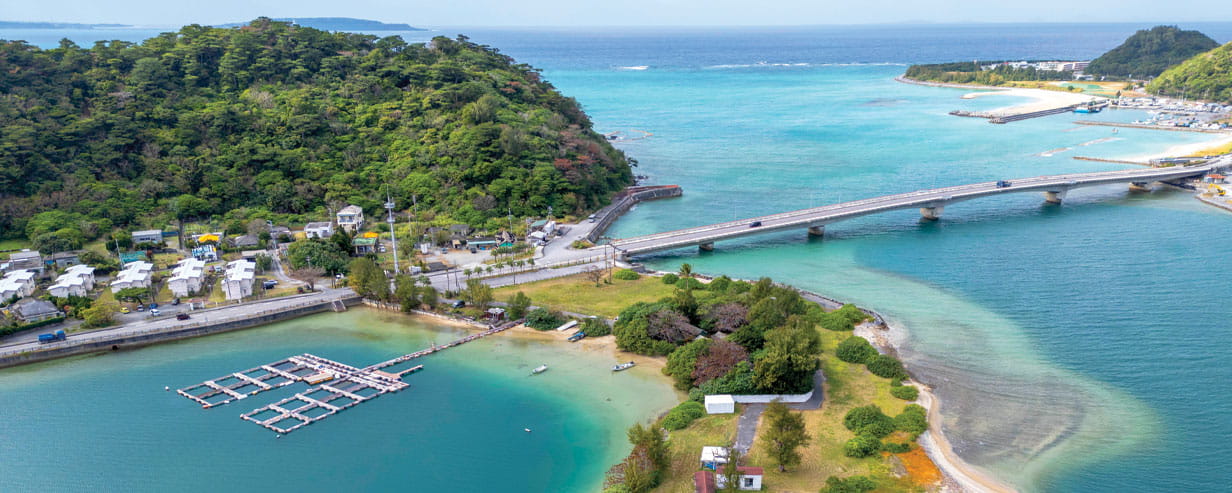
Discover why so many of Okinawa’s inhabitants are centenarians – and their 7 rules for longevity.
At 82, Rikio Yokota is supremely fit and energetic, moving with the flexibility and vigour of a man a fraction of his age. This is not unusual in Okinawa, one of the world’s so-called “blue zones”, known for their unusually high numbers of centenarians.
I’ve travelled to the village of Higashi in north Okinawa to find out why the lifespans of the people here are so long, but also – crucially – their healthspans, the period of life spent in good health. Rikio and his equally energetic wife Etsuko, 76, invite me into their home and we spend the next few hours sitting on the floor in a traditional seiza kneeling pose.
There are no squishy sofas in this traditional home and, while I fidget and struggle to remain in the pose, they look remarkably comfortable, nimbly getting up and down to fetch jasmine tea and food.
The fact that traditional houses like theirs have mats instead of chairs and low futons instead of beds is thought to be a key factor in their inhabitants’ long, healthy lives.
This simple act of getting up and down off the floor multiple times a day – essentially doing repeated squats – is fantastic for core stability and balance.

But this is far from Rikio’s only form of daily activity. He tells me that his typical day involves working in the fields for around nine hours. All that activity means he sleeps well and wakes refreshed at 5am. After breakfast, he heads to his fields at 7am, where he grows sticky potatoes (ryukyu yaman) – a nutrient-packed vegetable, rich in fibre, antioxidants and potassium.
He also grows wood ear mushrooms (kikurage) – another excellent source of fibre, plus B and D vitamins, iron and antioxidants. He sells most of his crop, but he and Etsuko keep some to eat, alongside lots of other fresh vegetables.
On their low table (chabudai), they serve me a typical lunch of miso soup (full of probiotics and vitamins) scattered with yushi tofu (rich in vegetable protein). This is followed by Okinawa soba – noodles in broth topped with kelp seaweed (kombu) and a small scattering of stewed pork ribs (soki), which is high in natural collagen. For dessert, Etsuko offers me a shikuwasa from the tree in their garden.
This superfood, which looks like a tiny satsuma, is known as the “longevity fruit” and is frequently eaten in Okinawa. It tastes quite bitter but is packed with vitamin C, antioxidants, flavonoids (including the anti-inflammatory, anti-obesity nobiletin, found in the peel).
In a typical day, Rikio will farm until his lunch at 12pm, then he’ll have a three-hour nap and head back out to the field from 4pm to 8pm. He does this every day, including weekends, and clearly enjoys it, saying it gives him what Okinawans consider crucial to a happy older age: ikigai, a sense of purpose.
“Working in the field is the best way to enjoy my day and having this regular routine is the key to living a long, happy life,” he tells me.
FYI

Dubbed “the land of the immortals”, Okinawa is one of the world’s five blue zones – the others are Ikaria in Greece, Sardinia in Italy, Nicoya in Costa Rica, and Loma Linda in California – and there are currently more than 1,000 centenarians here in a population of 1.46 million.
While the number of centenarians in some “blue zones” has been questioned due to poor record-keeping and even pension fraud, Dr Craig Willcox, a professor of gerontology and author of The Okinawa Way says that the Japanese prefecture keeps meticulous birth and health records, leaving little doubt about the ages here.
He attributes their longevity to a finely tuned blend of factors. “What stands out in the traditional Okinawan pattern isn’t one superfood,” he says. “It’s a whole lifestyle where diet, daily movement, and social connection reinforce each other over decades.”

One key factor is that most Okinawans continue employment after traditional retirement age. Some change occupations (Rikio used to run a transport company), but others just continue in their first job: in Nago, north of Okinawa, Genji Kinjo, 97, and his wife Fumiko, 99, who operate a noodle restaurant, hold the Guinness World Record for being the oldest working married couple. Etsuko’s main occupation now is as a voluntary community support worker.
She visits people who live alone and helps them with money or health problems. Another secret to Okinawans’ longevity is thought to be the fact that they keenly maintain strong social networks (moai) such as this.
Like many in their region, Rikio and Etsuko look set to enjoy not only a long lifespan (the oldest person in the area is currently 104) but also an excellent healthspan. The couple have regular check-ups but neither has had any major health issues.
This is the case among many local elders. Heart disease, breast cancer and prostate cancer are rare and the frequency of diabetes, dementia and strokes is low. Higashi is one of the three villages in the “longevity area” of Yambaru, where traditional Okinawan ways are followed.
In the city of Naha on the southwest coast, however, Western influences such as fast-food restaurants are being felt and the obesity rate is rising in younger people. For this reason, Okinawa no longer has the most centenarians in Japan – although the country overall still has the most centenarians in the world.
However, Riko and Etsuko are helping to preserve the area’s longevity blueprint by encouraging younger people, including their children and grandchildren, to follow the traditional ways of life.
Discover Japan with Saga Holidays
The huge interest in longevity and blue zones has driven a rapidly growing market for cellular energy supplements, an area of growing scientific interest. The supplements are designed to boost NAD+ (nicotinamide adenine dinucleotide), a coenzyme in cells crucial for mitochondrial function, which depletes over time.
It’s thought that the Okinawan way of life maintains NAD+ levels, whereas in the West they are depleted faster by overeating, stress, lack of sleep, alcohol and sedentary lifestyles. Research is promising but at an early stage.
Scientists have shown that supplements can increase NAD+ levels and studies are ongoing into the wider impact on physical health.
“We can’t fully replicate Okinawans’ diet and lifestyle, which preserves NAD+ levels, but we can charge our NAD+ battery,” says Paul Chamberlain, nutritional lead at Solgar*. The supplement brand recently launched its Cellular Energy capsules, formulated to boost NAD+ production.
(*Solgar takes a science-led approach to cellular wellbeing, supporting the body's natural energy and resilience to help people feel their best every day for longer.)
(Hero image credit: Simon John Owen/Solgar)


Booked your trip and thinking about travel insurance? When you're looking to compare travel insurance, don't settle for less.

Your chance to win cruise for two to Cádiz, Casablanca and the Canary Islands, worth more than £9,600.

Ancient palaces, crystal-clear seas and undiscovered budget beaches – our travel experts share the best travel destinations for 2026.

Our guide to the most remarkable places to visit in Africa, the continent of contrasts.
.jpg?la=en&h=760&w=1730&hash=3900F1F9D5EBD1961A7DFC7B29B5BA1A)
Holidays can boost your brain power, help you live longer and even relieve pain.






Autumn on Europe’s rivers is always spectacular. We’ve got the best cruises to try in 2025.


We help you beat the airlines at their own game with the cabin bag weight and size limits for the UK's seven most popular carriers.